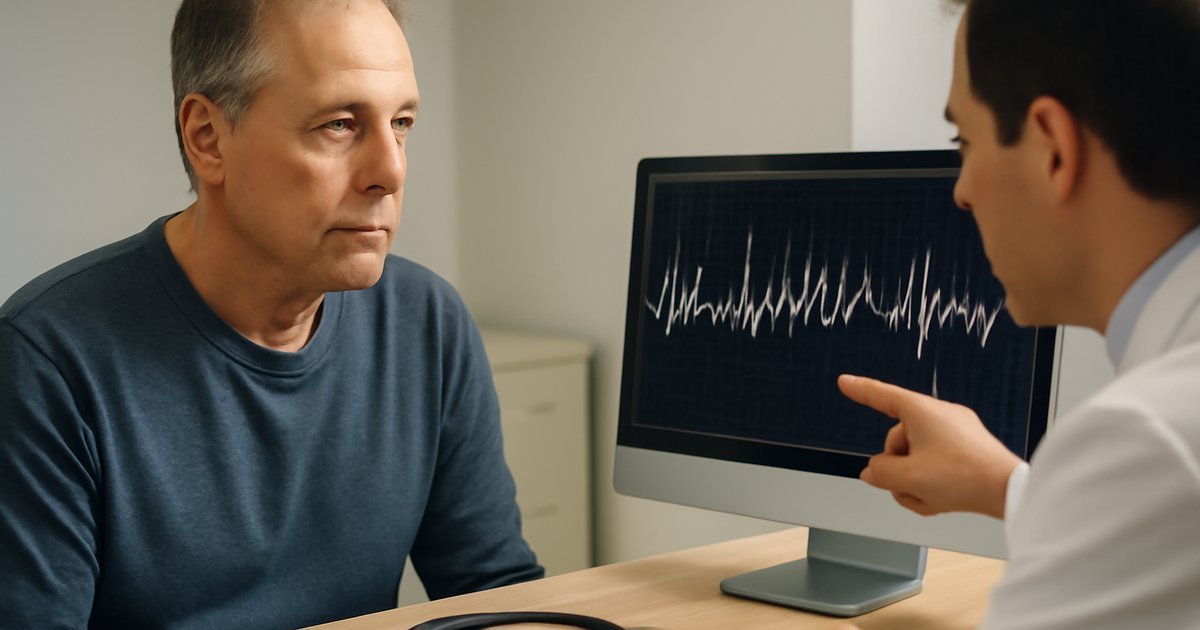
Atrial fibrillation is the most common serious heart rhythm disorder in adults — and men face a significantly higher lifetime risk than women.
Introduction
James, 62, noticed his heart had been “fluttering” occasionally for weeks. He chalked it up to stress and too much coffee. One morning, the sensation became impossible to ignore — his chest felt tight, he was dizzy, and his heart seemed to be racing out of rhythm. At the ER, he was diagnosed with atrial fibrillation, a condition he had never heard of but that affects millions of American men just like him.
According to the American Heart Association, atrial fibrillation — commonly called AFib — affects an estimated 6 to 12 million people in the United States, with projections suggesting that number could rise to 12.1 million by 2030. Men are up to 50% more likely than women to develop AFib over their lifetime, and the risk increases sharply after age 50.
In this guide, you’ll learn what atrial fibrillation is, how to recognize its symptoms, what causes it, how it’s diagnosed and treated, and — critically — when it becomes a medical emergency. Whether you’ve just been diagnosed or are concerned about your heart health, this article will give you the clear, trustworthy information you need.
What Is Atrial Fibrillation?
Your heart beats in a coordinated rhythm controlled by electrical signals. In a healthy heart, those signals travel in an organized pattern from the upper chambers (atria) to the lower chambers (ventricles), pumping blood efficiently throughout your body.
In atrial fibrillation, the electrical signals in the upper chambers become chaotic and disorganized. Instead of one coordinated contraction, the atria quiver rapidly and irregularly — sometimes firing 300 to 600 times per minute. This causes the ventricles to beat irregularly as well, making the heart inefficient and unpredictable.
The result? Blood doesn’t pump effectively, which means it can pool in the atria, form clots, and potentially travel to the brain — dramatically increasing stroke risk. According to the NIH, people with AFib are five times more likely to have a stroke than those without the condition.
AFib is classified into several types:
- Paroxysmal AFib: Episodes come and go, usually stopping on their own within 24-48 hours
- Persistent AFib: The irregular rhythm lasts more than 7 days and may require treatment to restore normal rhythm
- Long-standing persistent AFib: Continuous AFib lasting more than 12 months
- Permanent AFib: The irregular rhythm is accepted as the ongoing state, and the goal shifts to rate control rather than rhythm restoration
Signs and Symptoms of AFib in Men
One of the most challenging aspects of atrial fibrillation is that it doesn’t always feel dramatic. Some men experience vivid, disruptive symptoms. Others — up to 30%, according to clinical estimates — have no symptoms at all and discover AFib only during a routine EKG or physical exam.
When symptoms do appear, they may include:
Common early symptoms:
- Heart palpitations — a fluttering, racing, or “flopping fish” sensation in the chest
- Irregular heartbeat that feels erratic or unpredictable
- Mild shortness of breath with activity
- Fatigue or reduced exercise tolerance
- Lightheadedness or dizziness
More significant or advanced symptoms:
- Persistent shortness of breath, even at rest
- Chest pain or pressure
- Fainting or near-fainting (syncope)
- Significant weakness or inability to complete normal physical tasks
- Swelling in the legs or ankles (a sign of associated heart failure)
A landmark study published through the Framingham Heart Study found that men with AFib have a substantially higher risk of stroke, heart failure, and premature death compared to men without the condition — underscoring why even mild symptoms deserve medical attention.
Causes and Risk Factors in Men
Atrial fibrillation rarely appears out of nowhere. In most cases, it develops against a background of underlying heart conditions, lifestyle factors, or systemic health issues. Research suggests that the following are among the most common contributors:
Cardiovascular and structural causes:
- High blood pressure (hypertension) — the single most common risk factor for AFib in the US
- Coronary artery disease or prior heart attack
- Heart failure or weakened heart muscle (cardiomyopathy)
- Structural heart defects or valve disorders
- Previous cardiac surgery
Lifestyle and metabolic risk factors:
- Obesity — clinical evidence indicates that men with a BMI over 30 have a 50% higher risk of developing AFib
- Sleep apnea — untreated obstructive sleep apnea is strongly linked to AFib development and recurrence
- Heavy or chronic alcohol use (“holiday heart syndrome” describes AFib triggered by binge drinking)
- Excessive caffeine intake in susceptible individuals
- Intense endurance sports training over many years
- Type 2 diabetes and metabolic syndrome
Other contributing factors:
- Hyperthyroidism (overactive thyroid)
- Chronic inflammatory conditions
- Age — risk rises sharply after 60, with up to 9% of adults over 65 having AFib, per CDC data
- Family history of arrhythmia
According to the American Heart Association, hypertension accounts for more AFib cases in the US population than any other single risk factor. If you have high blood pressure and haven’t had your heart rhythm evaluated recently, that’s worth discussing with your doctor.
Men who struggle with conditions like chronic kidney disease or metabolic disorders may face compounded cardiovascular risk, since these conditions often coexist with and worsen AFib.
Diagnosis: What to Expect
If your doctor suspects atrial fibrillation — either because of symptoms or an abnormal finding on a routine physical — they’ll recommend a series of tests to confirm the diagnosis and understand its underlying cause.
Core diagnostic tests:
- Electrocardiogram (EKG or ECG): The primary tool for diagnosing AFib. A standard 12-lead EKG can confirm the diagnosis if AFib is present during the test.
- Holter monitor: A portable EKG device worn for 24-48 hours (or longer) to capture intermittent AFib episodes that might not appear during a brief office visit.
- Event monitor or implantable loop recorder: For patients with very infrequent episodes, a longer-term monitoring device may be implanted under the skin to record heart rhythms over weeks or months.
- Echocardiogram: An ultrasound of the heart to evaluate its structure, check for valve problems, and look for blood clots in the atria.
- Blood tests: Thyroid function, kidney function, electrolytes, and complete blood count help identify underlying triggers.
- Stress test: May be ordered to evaluate exercise-induced arrhythmia or underlying coronary artery disease.
Your physician may also ask about your sleep patterns. Research from Johns Hopkins Medicine indicates that treating sleep apnea can significantly reduce AFib recurrence rates, making sleep evaluation an important part of the diagnostic workup for many men.
Most physicians will also calculate your CHA₂DS₂-VASc score — a clinical scoring tool that estimates your stroke risk based on multiple factors. This score helps guide decisions about blood-thinning medication.
Treatment Options for Atrial Fibrillation
Treatment for AFib is individualized. Your age, overall health, type of AFib, and symptom burden all influence which approach your cardiologist recommends. The three main goals of treatment are: controlling heart rate, restoring and maintaining normal rhythm, and preventing stroke.
Rate Control Medications
For many patients — especially older adults or those with permanent AFib — the goal is to slow the heart rate to a comfortable range rather than restoring a perfect normal rhythm. Beta-blockers and calcium channel blockers are commonly used for this purpose. Most physicians aim for a resting heart rate below 80-100 beats per minute, though individual targets vary.
Rhythm Control Medications (Antiarrhythmics)
These medications aim to restore and maintain normal sinus rhythm. They carry a more complex risk profile and require careful monitoring. Clinical evidence from the AFFIRM trial and subsequent studies has helped physicians understand when rate control versus rhythm control is the better strategy for individual patients.
Blood Thinners (Anticoagulants)
Stroke prevention is often the most critical component of AFib management. Modern direct oral anticoagulants (DOACs) — a category that has largely replaced warfarin in many patients — have been shown in large clinical trials to significantly reduce stroke risk. Your physician will weigh your stroke risk against your bleeding risk before recommending anticoagulation therapy.
Cardioversion
Electrical cardioversion is a procedure — performed under sedation — in which a controlled electric shock is delivered to the chest to reset the heart’s rhythm. It’s often effective in the short term, though AFib can return, particularly without addressing underlying causes.
Catheter Ablation
A minimally invasive procedure in which a cardiologist uses catheters to deliver energy (radiofrequency or cryotherapy) to small areas of heart tissue that are triggering abnormal electrical signals. Research published in the New England Journal of Medicine suggests ablation may reduce AFib recurrence more effectively than medication alone in certain patient groups, particularly younger patients with paroxysmal AFib.
Surgical Options
The MAZE procedure — typically performed during open-heart surgery for another condition — creates a pattern of scar tissue in the atria to block chaotic electrical signals. A minimally invasive version (mini-MAZE) is also available at specialized centers.
Lifestyle Modifications That Complement Medical Treatment
- Achieving and maintaining a healthy weight — research suggests weight loss of 10% or more can significantly reduce AFib burden
- Treating sleep apnea with CPAP therapy
- Limiting or eliminating alcohol
- Regular moderate-intensity exercise (after clearance from your physician)
- Managing blood pressure through diet, medication, and lifestyle changes
- Reducing excessive caffeine if it appears to trigger episodes
Understanding how heart health connects to overall wellness is critical. If you’ve been working on managing stress and mental health, know that chronic stress and anxiety can worsen heart rhythm disorders — making integrated care especially important for men managing AFib.
Living With Atrial Fibrillation: Practical Day-to-Day Management
A diagnosis of AFib can feel frightening, but most men with well-managed AFib lead full, active lives. Here’s what helps:
- Take medications consistently: Missing doses of anticoagulants or rate-control medications significantly increases your risk. Use pill organizers or phone reminders.
- Monitor your heart rate: Many physicians recommend checking your pulse daily. Consumer-grade smartwatches and wearable monitors approved by the FDA can now detect irregular rhythms — a useful tool for tracking between appointments.
- Keep a symptom journal: Note when episodes occur, their duration, what you were doing, and what you ate or drank. This data helps your cardiologist refine your treatment plan.
- Stay physically active — within appropriate limits: Most men with stable AFib can exercise, though your physician should guide intensity levels.
- Manage stress proactively: Mind-body practices like meditation, diaphragmatic breathing, and adequate sleep all support cardiac health.
- Attend all scheduled follow-ups: AFib management evolves over time. Routine EKGs, lab monitoring (especially on blood thinners), and cardiology check-ins are essential.
Men managing multiple conditions simultaneously — for example, those with AFib and chronic kidney disease — require particularly careful medication coordination, as kidney function affects how blood thinners are metabolized.
When to Call Your Doctor — and When to Call 911
Knowing the difference between symptoms that can wait for a scheduled appointment and those that require immediate care is essential for every man living with AFib.
Call your doctor within 24 hours if you notice:
- A new or unusually prolonged episode of palpitations
- Increased fatigue or reduced exercise tolerance without another explanation
- Swelling in your legs or ankles
- A heart rate consistently above 100 beats per minute at rest
- Signs of bleeding if you’re on blood thinners (unusual bruising, prolonged bleeding from cuts)
Call 911 or go to the ER immediately if you experience:
- Sudden chest pain or pressure
- Sudden numbness or weakness in your face, arm, or leg — especially on one side of the body (possible stroke)
- Sudden difficulty speaking, understanding speech, or confusion
- Sudden vision changes in one or both eyes
- Severe shortness of breath or inability to breathe comfortably at rest
- Fainting or loss of consciousness
- Rapid heart rate above 150 beats per minute that doesn’t resolve
These symptoms may indicate a stroke, heart failure exacerbation, or a dangerous acceleration of your heart rhythm — all of which require emergency evaluation. Do not wait and do not drive yourself.
Frequently Asked Questions About AFib in Men
Q: Can atrial fibrillation go away on its own?
Paroxysmal AFib episodes can stop on their own, sometimes within minutes to hours. However, “going away” doesn’t mean the condition is resolved — without treatment, episodes typically become more frequent and longer over time. Clinical evidence indicates that untreated AFib tends to progress. Always work with your physician even if episodes seem mild.
Q: Is AFib a life-threatening condition?
AFib itself is not immediately life-threatening for most people, but its complications — particularly stroke and heart failure — can be serious or fatal. Research suggests that with appropriate treatment and lifestyle management, most men with AFib can significantly reduce their risk of these complications and maintain good quality of life.
Q: Can I exercise if I have AFib?
For most men with stable, well-controlled AFib, moderate exercise is not only safe but beneficial. However, high-intensity exercise or competitive athletics may require additional evaluation. This varies significantly from person to person — always get your cardiologist’s guidance on exercise intensity and type before starting or intensifying a program.
Q: Does alcohol really trigger AFib?
Yes — clinical evidence is strong on this point. Even moderate alcohol consumption is associated with increased AFib risk and episode frequency. A study published in the Journal of the American College of Cardiology found that each additional drink per day was associated with an 8% higher risk of developing AFib. Many physicians recommend that men with AFib minimize or eliminate alcohol entirely.
Q: What’s the difference between AFib and a heart attack?
These are different conditions. A heart attack (myocardial infarction) occurs when a blocked artery cuts off blood supply to heart muscle. AFib is a rhythm disorder — the heart’s electrical system fires chaotically. They can coexist and each can trigger the other, but they have different mechanisms, symptoms, and treatments. Chest pain that feels like pressure, squeezing, or crushing — especially with sweating, jaw pain, or arm pain — is more suggestive of a heart attack and always warrants emergency evaluation.
Conclusion
Atrial fibrillation is a serious but manageable condition. For men over 50, understanding the symptoms, risk factors, and treatment landscape isn’t just useful — it could be lifesaving. The good news is that modern medicine offers a wide range of effective tools, from medications and minimally invasive procedures to meaningful lifestyle changes that can reduce episode frequency and dramatically lower stroke risk.
The most important step you can take is staying engaged with your healthcare team. Don’t ignore palpitations, don’t skip follow-up appointments, and don’t stop medications without medical guidance. With the right plan in place, most men with AFib live full, active, and productive lives. Your heart health is worth the attention — and so are you.
Medical Disclaimer: This article is for informational and educational purposes only. It does not constitute medical advice, diagnosis, or treatment. Always consult your physician or a qualified healthcare provider before making changes to your health routine or treatment plan.
Medically reviewed by our editorial health team. Content follows evidence-based standards aligned with CDC and NIH guidelines.
Leave a Reply