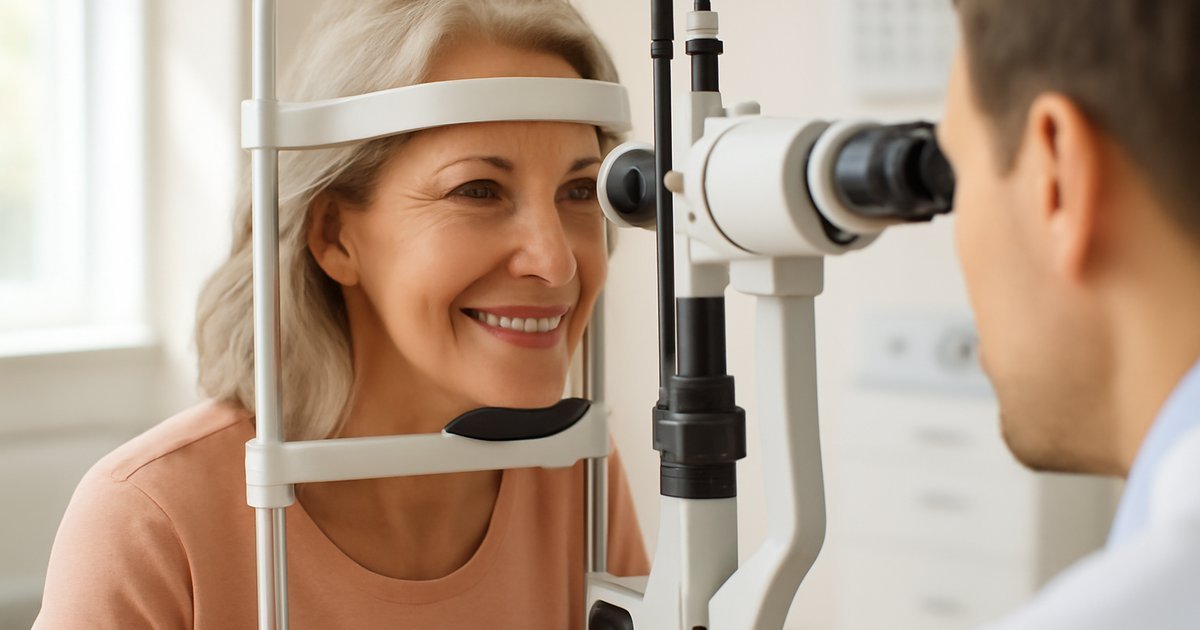
Age-related vision changes are not inevitable fate — but they do require your attention, starting now.
Margaret, 62, had always prided herself on perfect eyesight. No glasses, no contacts — until one morning she noticed the words on her coffee mug blurring no matter how far she held it from her face. Within a year, she had been diagnosed with early-stage age-related macular degeneration (AMD). “Nobody told me my eyes could just start changing like that,” she said. “I thought vision problems were something that happened to other people.”
Margaret’s experience is far from unique. According to the CDC, approximately 12 million Americans aged 40 and older have some form of vision impairment — and that number is expected to double by 2050 as the population ages. Vision health after 50 is one of the most overlooked components of healthy aging, yet it directly affects your independence, your mental health, your fall risk, and your overall quality of life.
In this guide, you’ll learn how your eyes change with age, which conditions to watch for, what modern medicine can do to protect your sight, and — critically — what practical steps you can take starting today to preserve your vision for decades to come.
What Happens to Your Eyes as You Age?
Your eyes are remarkable organs — and like every other part of your body, they undergo natural structural and functional changes as you age. Understanding those changes is the first step to protecting yourself.
The most common age-related eye condition is presbyopia (prez-bee-OH-pee-uh) — the gradual loss of your eye’s ability to focus on nearby objects. It happens because the lens inside your eye becomes less flexible over time. If you’ve found yourself holding your phone farther away to read it, this is likely why. Presbyopia typically begins around age 40 and progresses into the mid-60s.
Beyond presbyopia, the National Eye Institute (NEI), part of the NIH, identifies four major eye diseases that become significantly more common after age 50:
- Age-related macular degeneration (AMD) — damage to the macula, the central part of the retina responsible for sharp, central vision
- Cataracts — clouding of the eye’s natural lens
- Glaucoma — a group of diseases that damage the optic nerve, often due to increased pressure in the eye
- Diabetic retinopathy — damage to the blood vessels of the retina caused by diabetes
Together, these conditions affect tens of millions of Americans — and most are preventable or manageable when caught early. According to the NEI, about 90% of vision loss caused by diabetic retinopathy can be prevented with timely treatment and proper diabetes management.
Signs and Symptoms to Watch For
One of the most dangerous aspects of age-related eye diseases is that many of them progress silently — causing little to no pain until significant damage has already occurred. That’s why recognizing even subtle changes in your vision is essential.
Early warning signs (see your eye doctor soon):
- Blurry or hazy vision that doesn’t clear with blinking
- Difficulty reading small print even with correction
- Increased sensitivity to glare — especially when driving at night
- Colors appearing less vivid or washed out
- Needing brighter light to read or do close work
- Straight lines appearing wavy or distorted (a hallmark of AMD)
- Frequent prescription changes in a short period
Advanced symptoms requiring prompt medical attention:
- Sudden loss of vision in one or both eyes
- A dark curtain or shadow across part of your visual field
- Sudden increase in floaters (spots or strings in your vision)
- Flashes of light, especially in peripheral vision
- Eye pain with nausea or vomiting (possible acute glaucoma)
A landmark study published in the journal Ophthalmology found that adults over 60 who experienced sudden changes in floaters or flashes had a significantly elevated risk of retinal detachment — a true ocular emergency. Clinical evidence consistently indicates that prompt care within 24 hours dramatically improves outcomes in these cases.
Causes and Risk Factors
Age is the most significant risk factor for vision decline — but it’s far from the only one. Understanding your personal risk profile helps you and your eye doctor make smarter, more targeted decisions about screening and prevention.
Non-modifiable risk factors:
- Age: Risk increases sharply after 60 for AMD, glaucoma, and cataracts
- Family history: First-degree relatives with glaucoma increase your lifetime risk by 4 to 9 times, according to the American Academy of Ophthalmology
- Race and ethnicity: African Americans are 6 to 8 times more likely to develop glaucoma than white Americans (CDC data); Hispanic Americans have elevated rates of diabetic retinopathy
- Sex: Women are at higher risk for AMD and dry eye disease, likely due to hormonal changes after menopause
Modifiable risk factors (things you can actually change):
- Smoking: Smokers are 2 to 4 times more likely to develop AMD than non-smokers, per the CDC
- Uncontrolled diabetes: The leading cause of new blindness in working-age Americans
- Uncontrolled hypertension: High blood pressure can damage the blood vessels supplying the retina
- UV light exposure: Lifetime sun exposure is linked to both cataracts and AMD
- Poor nutrition: Diets low in leafy greens and antioxidants are associated with higher AMD risk
- Obesity and physical inactivity: Linked to elevated intraocular pressure and diabetic eye disease
This list matters because it means your daily choices — what you eat, whether you smoke, how well you manage your blood sugar — directly influence your odds of maintaining good vision into your 70s and 80s.
Diagnosis: What to Expect at an Eye Exam
The American Academy of Ophthalmology recommends that adults over 40 have a comprehensive baseline eye exam, with follow-up exams at least every one to two years after age 65 — or more frequently if risk factors are present. Yet surveys consistently show that millions of at-risk Americans skip these appointments, often because they feel their vision is “fine.”
A comprehensive dilated eye exam — where your pupils are widened with eye drops to allow a detailed view of your retina — is the gold standard for detecting age-related eye disease early. During this exam, your eye care provider may perform:
- Visual acuity testing — the classic letter chart to assess how clearly you see at different distances
- Tonometry — measures pressure inside your eye to screen for glaucoma
- Dilated fundus examination — your doctor examines the retina, optic nerve, and blood vessels directly
- Optical coherence tomography (OCT) — a non-invasive imaging scan that produces detailed cross-sectional images of the retina, highly effective at detecting early AMD and glaucoma damage
- Visual field testing — checks for blind spots or peripheral vision loss, a key glaucoma indicator
If you have diabetes, the American Diabetes Association recommends a dilated eye exam at least once a year — regardless of whether you notice any vision changes. Many patients with early diabetic retinopathy have zero symptoms until the disease reaches an advanced stage.
Treatment Options for Age-Related Eye Conditions
The good news: modern ophthalmology has dramatically improved outcomes for most age-related eye diseases. Here’s what current evidence-based treatment looks like for each major condition.
Presbyopia: Corrective lenses (reading glasses, progressive lenses, bifocals) remain the standard and highly effective solution. Surgical options, including refractive lens exchange and corneal inlays, are available for select patients and should be discussed with a qualified ophthalmologist.
Cataracts: When cataracts significantly impair daily function, surgical removal and replacement with an artificial intraocular lens is the only definitive treatment — and it’s one of the most commonly performed and successful surgeries in the US, with over 4 million procedures performed annually (American Society of Cataract and Refractive Surgery). Clinical outcomes are excellent, with more than 95% of patients achieving significantly improved vision.
Age-related macular degeneration: Treatment depends on the type. Dry AMD (the most common form) currently has no FDA-approved cure, but research suggests that the AREDS2 supplement formula — containing vitamins C and E, lutein, zeaxanthin, zinc, and copper — can slow progression in intermediate-to-advanced cases, according to NIH-sponsored clinical trials. Wet AMD (less common but more rapidly damaging) is treated with anti-VEGF injections (such as ranibizumab or aflibercept), which have shown remarkable effectiveness in stabilizing and even partially restoring vision in clinical trials.
Glaucoma: Prescription eye drops that lower intraocular pressure are the first-line treatment for most patients. Laser therapy (SLT) and surgical procedures are options when drops are insufficient. Early diagnosis is critical — damage from glaucoma is irreversible, but progression can usually be halted with consistent treatment.
Diabetic retinopathy: Optimal blood sugar control is the foundation of prevention and management. Advanced cases may require laser treatment, anti-VEGF injections, or vitrectomy surgery. Tight glycemic control has been shown in landmark trials (including the DCCT and UKPDS studies) to reduce the risk of retinopathy development and progression by up to 76%.
If you’re managing diabetes alongside your eye health, you may also find it helpful to review our overview of Bone Density After 50 and related healthy aging concerns that often coexist in this age group.
Living Well With Eye Disease and Preventing Vision Loss
Whether you’ve already been diagnosed or you’re focused on prevention, these evidence-backed strategies can meaningfully protect your long-term vision health.
Wear UV-protective sunglasses consistently. Look for lenses labeled “100% UV400 protection.” Wraparound styles provide the best coverage. The American Academy of Ophthalmology notes that cumulative UV exposure is a key driver of both cataracts and AMD.
Eat a vision-protective diet. Research published in the Archives of Ophthalmology found that diets rich in lutein and zeaxanthin — found in leafy greens like kale, spinach, and collards — were associated with significantly lower rates of AMD. Fatty fish (salmon, sardines) provide omega-3s that support retinal cell function. Consider reading more about the anti-inflammatory benefits of key nutrients in our guide to Turmeric and Curcumin for Natural Wellness.
Quit smoking. If you smoke, this single change may be the most powerful thing you can do for your eyes. The link between smoking and AMD, cataracts, and optic nerve damage is well-established across multiple large cohort studies.
Manage your chronic conditions. Keeping blood pressure, blood sugar, and cholesterol well-controlled directly protects the blood vessels that nourish your eyes. This varies from person to person, so work with your physician to set appropriate targets.
Follow the 20-20-20 rule for digital screen use. Every 20 minutes, look at something 20 feet away for at least 20 seconds. This reduces digital eye strain, which — while not a permanent condition — can cause significant discomfort and blurred vision in adults who spend long hours on screens.
Exercise regularly. A 2011 study from the British Journal of Ophthalmology found that regular physical activity was associated with a 70% reduced risk of developing AMD over a 15-year follow-up period. Most physicians recommend at least 150 minutes of moderate-intensity aerobic activity per week.
Protect your eyes from injury. Wear appropriate protective eyewear when gardening, doing home repairs, or playing sports. Eye injuries account for a significant proportion of preventable vision loss in adults.
If you’re also managing age-related skin changes alongside eye health concerns, our article on Skin Health After 50 explores overlapping UV protection and antioxidant strategies worth reviewing.
When to Call Your Doctor — and Emergency Red Flags
Knowing when to seek care immediately can make the difference between preserved and lost vision. Here are the situations that require urgent action:
Call 911 or go to the ER immediately if you experience:
- Sudden complete or partial vision loss in one or both eyes
- A dark shadow or curtain spreading across your visual field
- Sudden onset of severe eye pain, especially with nausea or vomiting
- A sudden dramatic increase in floaters combined with flashes of light
- Double vision of sudden onset (may indicate a neurological emergency)
Schedule a prompt appointment (within days to one week) if you notice:
- Any new or worsening blurring that doesn’t resolve within a day or two
- Straight lines appearing wavy or distorted (use the Amsler grid — a free printable from the NEI — to self-check)
- Significant changes to your peripheral vision
- Prolonged eye pain, redness, or light sensitivity
At your next scheduled visit, mention:
- Difficulty with night driving or glare
- Increased difficulty reading or doing close work
- Any family history of glaucoma or AMD you haven’t already disclosed
- Any new medications you’re taking that might affect eye health (some steroids, antimalarials, and blood pressure medications carry ocular side effects)
Frequently Asked Questions About Vision Health After 50
Q: How often should adults over 50 have their eyes examined?
A: The American Academy of Ophthalmology recommends a comprehensive dilated eye exam every one to two years for adults over 50 with no identified risk factors. If you have diabetes, a family history of glaucoma, or other risk factors, your eye doctor may recommend annual or even more frequent exams. This varies from person to person, so follow your provider’s specific guidance.
Q: Can I prevent cataracts?
A: There is currently no proven medication or supplement that prevents cataracts, but certain behaviors significantly reduce risk. Not smoking, wearing UV-protective sunglasses, managing diabetes, and eating a diet rich in antioxidants are all associated with delayed cataract onset in observational research.
Q: Are there supplements that actually help protect my eyes?
A: The AREDS2 formula (a specific combination of lutein, zeaxanthin, vitamins C and E, zinc, and copper) has the strongest clinical evidence — specifically for slowing the progression of intermediate or advanced dry AMD, based on NIH-funded trials. Research suggests that general antioxidant-rich diets also support eye health, but individual supplements should be discussed with your doctor before starting them.
Q: Does staring at screens damage my eyes permanently?
A: Clinical evidence indicates that digital screens do not cause permanent eye damage, but they do contribute to digital eye strain (also called computer vision syndrome), which causes temporary blurring, dryness, headaches, and discomfort. Prolonged screen time without breaks also reduces your blink rate, worsening dry eye — a condition that becomes more common with age.
Q: What is the Amsler grid and should I use it?
A: The Amsler grid is a simple black-and-white grid pattern used to detect distortions in central vision — a hallmark early sign of AMD. The NEI recommends that people at risk for AMD check their vision with an Amsler grid regularly at home. If straight lines appear wavy or any area of the grid looks blank, contact your eye doctor promptly.
The Bottom Line on Vision Health After 50
Your vision is not something to take for granted — especially after 50, when the landscape of eye health changes significantly. The encouraging truth is that most vision-threatening conditions are either preventable, treatable, or manageable when identified early. Routine comprehensive eye exams, a healthy lifestyle, UV protection, and careful management of conditions like diabetes and hypertension give you a powerful toolkit for protecting your sight.
You don’t have to accept vision loss as an inevitable part of getting older. With the right information, regular professional care, and consistent daily habits, most adults can preserve functional, high-quality vision well into their later years. The next step is simple: if you haven’t had a dilated eye exam in the past year or two, call your eye doctor and schedule one today.
Medical Disclaimer: This article is for informational and educational purposes only. It does not constitute medical advice, diagnosis, or treatment. Always consult your physician or a qualified healthcare provider before making changes to your health routine or treatment plan.
Medically reviewed by our editorial health team. Content follows evidence-based standards aligned with CDC and NIH guidelines.