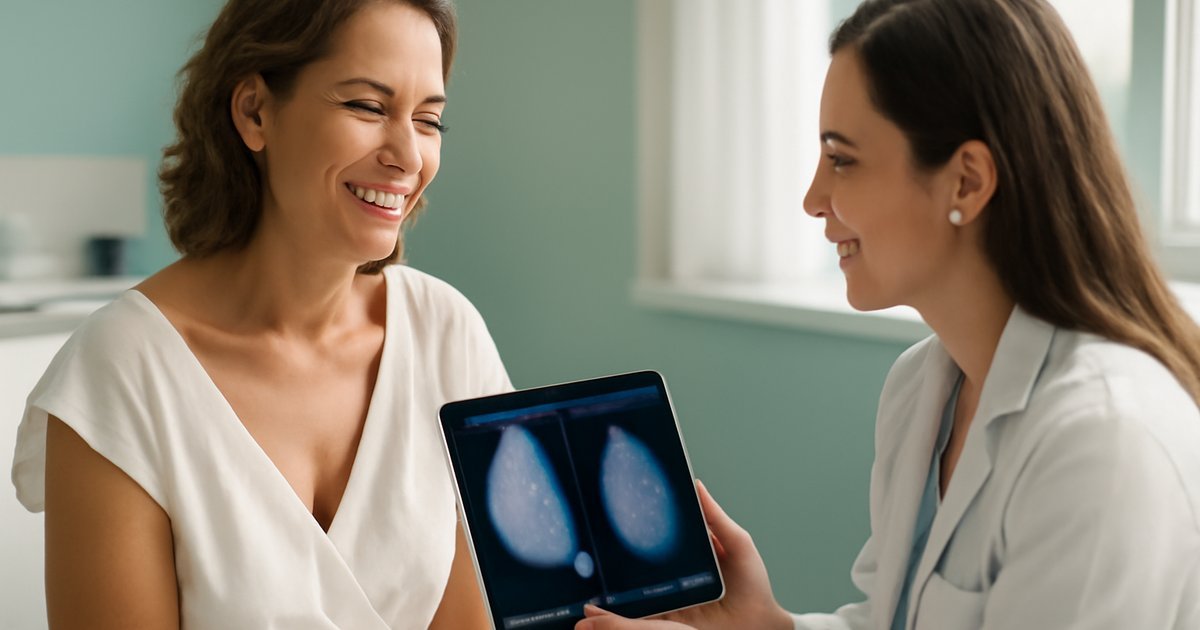
Most breast cancers are found in women over 40 — yet millions still skip their annual mammogram or dismiss warning signs as normal aging.
Why Breast Health Deserves Your Full Attention After 40
Linda, 44, noticed a small lump during a routine self-exam. She almost dismissed it — she had dense breast tissue, and her doctor had mentioned lumps could be benign. But she made the appointment anyway. That decision led to an early-stage diagnosis, successful treatment, and years of healthy living ahead.
According to the American Cancer Society, breast cancer is the most commonly diagnosed cancer in American women, with approximately 310,720 new invasive breast cancer cases expected in 2024. It is also the second leading cause of cancer death in women in the United States.
The good news: when caught early, the five-year survival rate for localized breast cancer exceeds 99%, according to the National Cancer Institute. That makes proactive breast health — understanding what is normal, what is not, and when to get screened — one of the most powerful things you can do for yourself after 40.
This guide covers what changes to expect in your breasts as you age, what symptoms deserve medical attention, how screenings work, and evidence-based steps you can take to reduce your risk.
What Happens to Breast Tissue After 40?
Breast tissue is not static. It changes throughout your entire life, influenced by hormonal shifts, weight fluctuations, pregnancy, breastfeeding, and aging. Understanding these changes helps you recognize what is normal versus what warrants a call to your doctor.
During your 40s and into perimenopause, estrogen levels begin to fluctuate. This hormonal shift causes glandular tissue (the milk-producing structures) to gradually replace with fatty tissue. For many women, this actually makes mammograms easier to read — but dense breast tissue can persist and is itself considered a risk factor for breast cancer.
Common normal changes you may notice after 40 include:
- Breasts feeling less firm or full
- Temporary tenderness or swelling tied to your menstrual cycle
- Slight size asymmetry (common in most women)
- Noncancerous cysts that come and go with your cycle
- Nipple changes related to hormonal shifts
According to Johns Hopkins Medicine, most breast lumps — up to 80% — are benign. But any new lump, thickening, or persistent change should be evaluated by a healthcare provider. This varies from person to person, and only a clinical exam or imaging can determine what is happening in your specific case.
Signs and Symptoms: What to Watch For
Knowing your body’s baseline is the foundation of breast health. The more familiar you are with what is normal for you, the sooner you can recognize something that does not belong.
Early or subtle signs to bring to your doctor’s attention:
- A new lump or thickening in the breast or underarm area
- Changes in breast size or shape that are unexplained
- Skin dimpling, puckering, or a texture resembling an orange peel
- Nipple inversion (turning inward) when this is new
- Nipple discharge that is clear, bloody, or occurs without squeezing
- Persistent breast pain in one specific area (not tied to your cycle)
- Redness, scaling, or thickening of the nipple or breast skin
Signs that require prompt medical evaluation:
- A rapidly growing lump or mass
- Bloody nipple discharge from one breast
- Swelling in the entire breast, especially with redness and warmth (could indicate inflammatory breast cancer, a rare but aggressive form)
- Skin changes that resemble a rash or look like bruising that does not resolve
A 2022 analysis published through the NIH’s PubMed database found that women who performed regular breast self-awareness — not necessarily formal self-exams, but being attentive to changes — were more likely to present with earlier-stage diagnoses.
Causes and Risk Factors: What Raises Your Odds
Breast cancer does not have a single cause. Research suggests it results from a combination of genetic, hormonal, reproductive, and lifestyle factors. Understanding your personal risk profile helps you and your doctor make smarter screening and prevention decisions.
Factors you cannot change:
- Age: Risk increases significantly after 40. The CDC reports that most breast cancers are diagnosed in women aged 50 and older.
- Gender: Women are about 100 times more likely than men to develop breast cancer.
- Family history: Having a first-degree relative (mother, sister, daughter) with breast cancer roughly doubles your risk.
- Genetic mutations: BRCA1 and BRCA2 gene mutations significantly increase lifetime risk. Other genes such as PALB2 and ATM also play a role.
- Dense breast tissue: Women with dense breasts have both a higher risk of breast cancer and a greater chance that cancer can be hidden on a mammogram.
- Early menstruation or late menopause: Longer lifetime exposure to estrogen increases risk.
Factors influenced by lifestyle and environment:
- Alcohol consumption (research consistently links regular drinking to increased risk)
- Obesity or significant weight gain after menopause
- Physical inactivity
- Postmenopausal hormone therapy (specifically combined estrogen-progestin therapy used long-term)
- Having a first child after age 30 or never having children
- Not breastfeeding
It is important to note that having one or more risk factors does not mean you will develop breast cancer. Conversely, most women who develop it have no significant known risk factors beyond age and gender.
Diagnosis: Screenings and What to Expect
Screening is where early detection begins. The goal of breast cancer screening is to find cancer before it causes symptoms — when it is most treatable. Here is what clinical evidence and major US health organizations recommend.
Mammography remains the gold standard for routine breast cancer screening. The American Cancer Society recommends that women at average risk begin annual mammograms at age 45, though women aged 40-44 have the option to start. Women 55 and older can transition to every two years or continue annually based on personal preference and physician guidance.
3D Mammography (Tomosynthesis) is now widely available and offers a clearer, layer-by-layer image of breast tissue. Clinical evidence indicates it finds more cancers and results in fewer callbacks for additional imaging compared to standard 2D mammograms.
Breast MRI is recommended alongside mammography for women at high risk (generally defined as a 20% or greater lifetime risk), including those with BRCA mutations or a significant family history.
Ultrasound may be used alongside mammography in women with dense breast tissue to improve detection accuracy.
If you have not already, talk to your doctor about your individual risk level. Your physician may recommend a formal risk assessment tool such as the Tyrer-Cuzick model to calculate your lifetime risk and tailor your screening schedule accordingly. You may also want to review our guide on cervical health and preventive screenings as part of a broader approach to women’s health monitoring.
Treatment Options: What Modern Medicine Offers
If a suspicious finding leads to a biopsy and a breast cancer diagnosis, treatment options have advanced significantly. Most physicians individualize treatment plans based on the cancer’s type, stage, and molecular profile, as well as the patient’s overall health and personal preferences.
Surgery: Options range from lumpectomy (removing only the tumor and some surrounding tissue) to mastectomy (removing one or both breasts). Clinical evidence shows that for early-stage breast cancer, lumpectomy followed by radiation is equally effective as mastectomy in terms of survival rates.
Radiation therapy is commonly used after lumpectomy to destroy any remaining cancer cells in the breast.
Chemotherapy uses drugs to kill cancer cells and may be given before surgery (neoadjuvant) to shrink tumors or after (adjuvant) to reduce recurrence risk.
Hormone therapy (such as tamoxifen or aromatase inhibitors) is used for hormone receptor-positive breast cancers, which represent about 70-80% of all cases. These treatments block estrogen from fueling cancer cell growth.
Targeted therapy and immunotherapy have expanded options significantly, especially for HER2-positive and triple-negative breast cancers. Drugs like trastuzumab (Herceptin) specifically target proteins on cancer cells, sparing healthy tissue.
Lifestyle modifications — including maintaining a healthy weight, limiting alcohol, and staying physically active — are recommended as important complements to medical treatment, not replacements. The American Cancer Society notes that regular exercise during and after treatment can improve outcomes and quality of life.
Reducing Your Risk: Prevention Strategies Backed by Evidence
You cannot eliminate your risk entirely, but research suggests that several lifestyle choices can meaningfully reduce it — particularly for women in their 40s, 50s, and 60s who still have decades of health ahead.
Maintain a healthy weight after menopause. A large meta-analysis cited by the NIH found that postmenopausal women who were obese had a 20-40% higher risk of breast cancer compared to women at a healthy weight. This is largely because fat tissue produces estrogen, which can fuel hormone-sensitive breast cancer cells.
Limit or avoid alcohol. Even one drink per day has been associated with a modest but measurable increase in breast cancer risk. The American Cancer Society reports that women who consume two to three alcoholic drinks daily have about a 20% higher risk than non-drinkers.
Exercise regularly. Clinical evidence consistently links physical activity to reduced breast cancer risk. Most physicians recommend at least 150 minutes of moderate-intensity aerobic activity per week — such as brisk walking, swimming, or cycling.
Limit postmenopausal hormone therapy. If you are using combined hormone therapy for menopause symptoms, discuss the risks and benefits with your doctor. Using the lowest effective dose for the shortest necessary duration is the approach most physicians recommend.
Breastfeed if possible. Research suggests breastfeeding for at least a year reduces lifetime risk, possibly due to hormonal effects that delay ovulation.
Consider chemoprevention if you are high-risk. For women with a significantly elevated risk, medications such as tamoxifen, raloxifene, or aromatase inhibitors may reduce risk by 30-50%, according to the NIH. This is a conversation worth having with your physician or a breast health specialist. Hormonal changes also intersect with broader health concerns — our article on menopause and heart health explores how estrogen shifts affect cardiovascular risk, which often goes hand-in-hand with breast cancer prevention discussions.
When to Call Your Doctor or Seek Emergency Care
Breast health is not just about annual screenings. Knowing when to pick up the phone between appointments is just as important.
Call your doctor within the next few days if you notice:
- A new lump or thickening that persists through one full menstrual cycle
- Any nipple discharge not related to breastfeeding
- Skin changes on the breast or nipple that do not resolve
- Unexplained changes in breast shape or contour
Seek prompt medical attention (same day) if you experience:
- A rapidly growing lump that appears over days
- Bloody discharge from a nipple
- A breast that appears red, warm, swollen, and inflamed without an infection history — this could indicate inflammatory breast cancer, which can progress quickly
- Swollen lymph nodes under your arm that are new and persistent
At your next scheduled visit, bring a list of any changes you have noticed — even if you are not sure they matter. Tell your doctor your family history, any medications or supplements you are taking, and whether you have had prior biopsies or imaging. This context helps your physician make the most informed decisions about your care. You might also discuss thyroid health at this visit, since thyroid conditions and hormonal changes often overlap in women over 40 — see our overview of thyroid health after 50 for more background.
Frequently Asked Questions About Breast Health After 40
Q: At what age should I start getting mammograms?
A: The American Cancer Society recommends that women at average risk have the option to begin annual mammograms at age 40, with a strong recommendation to start by age 45. However, your physician may suggest starting earlier if you have a family history of breast cancer or known genetic risk factors. Always discuss your personal timeline with your doctor.
Q: I have dense breasts. Does that change my screening plan?
A: Yes, it can. Dense breast tissue makes mammograms harder to read and is independently associated with a higher breast cancer risk. Many states have passed laws requiring radiologists to notify patients about breast density. If you have dense breasts, your doctor may recommend supplemental screening with ultrasound or MRI in addition to your annual mammogram.
Q: Can I rely on self-exams alone to detect breast cancer?
A: Self-awareness is valuable, but self-exams alone are not a substitute for clinical screenings. Many tumors are too small to feel during early stages and can only be detected on imaging. Most physicians recommend staying familiar with your breasts so you can report changes promptly, while still keeping up with scheduled mammograms and clinical exams.
Q: Is breast pain a sign of cancer?
A: Breast pain (mastalgia) is extremely common and is most often related to hormonal fluctuations, caffeine sensitivity, ill-fitting bras, or benign cysts — not cancer. Research suggests that pain alone is rarely the first symptom of breast cancer. That said, if you have persistent, localized pain that does not vary with your cycle, bring it to your doctor’s attention.
Q: How does menopause affect my breast cancer risk?
A: After menopause, your risk of breast cancer actually increases with age, even as estrogen from your ovaries decreases. The greater the cumulative lifetime exposure to estrogen — from early periods, late menopause, or postmenopausal hormone therapy — the higher the risk. Maintaining a healthy weight after menopause is one of the most effective modifiable steps, because fat tissue continues producing estrogen after the ovaries stop.
Moving Forward With Confidence and Awareness
Breast health after 40 is not about fear — it is about being informed, proactive, and empowered. The science is clear: early detection saves lives, lifestyle choices matter, and open communication with your healthcare provider is irreplaceable.
Stay current with your screening schedule. Know your body well enough to recognize when something feels different. Ask your doctor about your personal risk level and what screening tools are right for you. And remember — no article, however thorough, replaces a conversation with a qualified physician who knows your complete health history.
You have every reason to be proactive about your breast health today.
Medical Disclaimer: This article is for informational and educational purposes only. It does not constitute medical advice, diagnosis, or treatment. Always consult your physician or a qualified healthcare provider before making changes to your health routine or treatment plan.
Medically reviewed by our editorial health team. Content follows evidence-based standards aligned with CDC, NIH, and American Cancer Society guidelines.