Clinical research is revealing why this ancient adaptogenic root has earned serious attention in modern integrative medicine.
Mark, 47, had been running on caffeine and adrenaline for the better part of a decade. His sleep was erratic, his cortisol levels were consistently elevated on lab work, and his physician had started the conversation about anxiety management options. That’s when Mark asked about ashwagandha — and whether the science actually supported its growing reputation.
It’s a question millions of Americans are asking. According to the American Botanical Council, adaptogens like ashwagandha have seen a dramatic surge in consumer interest over the past five years, with sales of herbal supplements in the US reaching multi-billion dollar figures annually. But unlike many wellness trends, ashwagandha — formally known as Withania somnifera — has a growing body of peer-reviewed clinical research behind it.
In this guide, you’ll learn what ashwagandha is, what the current clinical evidence actually says about its effects on stress, sleep, and hormonal health, who may benefit from it, and — critically — when to be cautious and how to use it as a complement to conventional care, not a replacement.
What Is Ashwagandha?
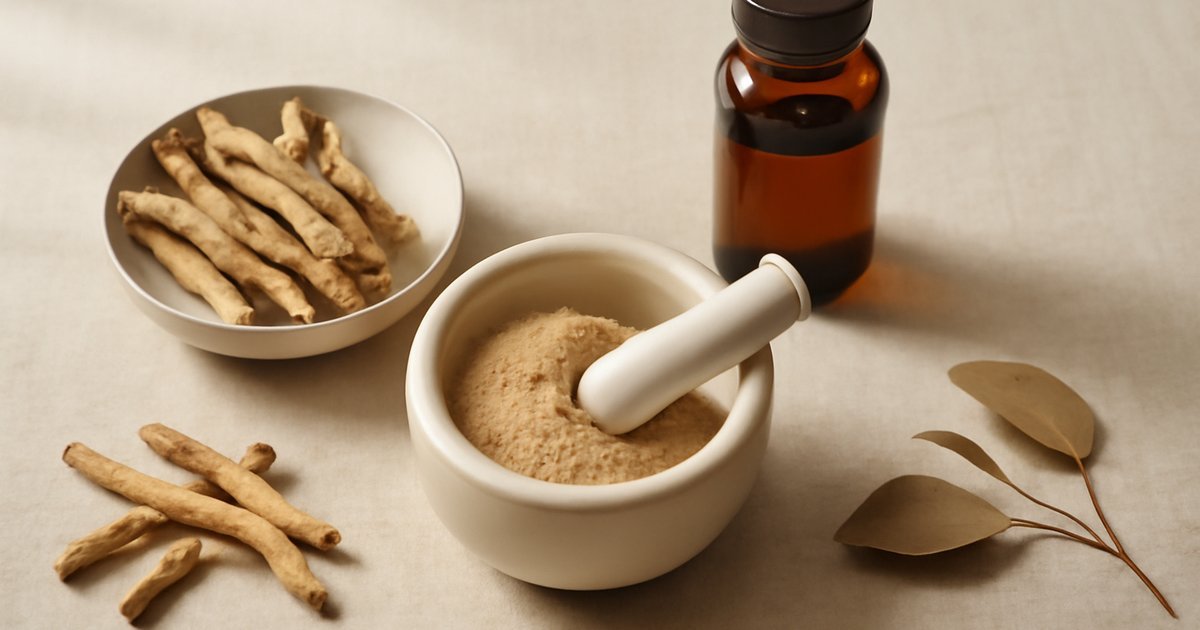
Ashwagandha is a small evergreen shrub native to India, North Africa, and parts of the Mediterranean. Its root has been used for centuries in Ayurvedic medicine — one of the world’s oldest traditional healing systems — as a rasayana, or rejuvenating tonic. In Western integrative medicine, it is classified as an adaptogen: a class of natural substances thought to help the body resist physical and psychological stress.
The active compounds in ashwagandha are primarily withanolides — a group of naturally occurring steroidal lactones concentrated in the root. These compounds are believed to modulate the hypothalamic-pituitary-adrenal (HPA) axis, the body’s central stress-response system, and may influence neurotransmitter pathways including GABA receptors in the brain.
According to the NIH’s National Center for Complementary and Integrative Health (NCCIH), ashwagandha is one of the most studied herbal supplements in the United States, with an increasing number of randomized controlled trials evaluating its safety and efficacy in human populations.
It is available in several forms, including root powder, standardized extracts (most studied), capsules, and gummies. Standardized extracts — particularly those standardized to a specific percentage of withanolides — are what most clinical trials have used, making them the most evidence-aligned option.
Potential Benefits: What the Evidence Shows
Research on ashwagandha is still evolving, but several areas have accumulated enough clinical data to warrant serious consideration. Here is what the evidence currently suggests — with appropriate context about the quality and limitations of each finding.
Stress and Cortisol Reduction
This is the most well-researched area of ashwagandha use. A 2019 randomized, double-blind, placebo-controlled trial published in Medicine found that adults who took a standardized ashwagandha root extract for eight weeks showed statistically significant reductions in perceived stress scores and serum cortisol levels compared to placebo. Cortisol — often called the "stress hormone" — is produced by the adrenal glands and plays a central role in the body’s fight-or-flight response.
Chronically elevated cortisol is associated with weight gain (particularly around the abdomen), disrupted sleep, immune suppression, and increased cardiovascular risk. Research suggests that ashwagandha may help regulate HPA axis activity, essentially helping the body mount a more proportionate stress response rather than a sustained, dysregulated one.
Clinical evidence indicates this effect is modest to moderate — meaningful for many people but not a standalone solution for severe anxiety disorders or clinical stress-related conditions. Most physicians recommend it as a complementary approach alongside behavioral interventions like cognitive behavioral therapy (CBT) and lifestyle modifications.
Sleep Quality
Emerging clinical data suggests that ashwagandha may support sleep quality, particularly in individuals whose poor sleep is linked to stress or an overactive stress-response system. A 2020 randomized controlled trial published in PLOS ONE found that adults with self-reported sleep problems who took ashwagandha extract for six weeks experienced significant improvements in sleep quality, sleep onset latency (how long it takes to fall asleep), total sleep time, and next-morning alertness compared to placebo.
The mechanism may involve ashwagandha’s interaction with GABA receptors — the same receptors targeted by many prescription sleep medications — though the degree of this effect in humans requires further study. It is worth noting that these improvements were measured using both validated questionnaires and actigraphy (a wearable device that tracks movement during sleep), lending some objective weight to the findings.
If you are already managing sleep challenges, you may find our article on Sleep After 50: Why It Changes and How to Sleep Better a useful complement to this information.
Hormonal Health and Thyroid Function
Ashwagandha’s relationship with hormonal health is nuanced and deserves careful explanation. Some clinical research suggests it may support thyroid hormone levels in individuals with subclinical hypothyroidism — a condition where TSH is mildly elevated but T3 and T4 remain in range. A small 2017 study found that participants with subclinical hypothyroidism who took ashwagandha for eight weeks showed statistically significant increases in T3 and T4 levels compared to placebo.
However, this thyroid-stimulating effect is precisely why ashwagandha requires medical supervision for anyone already on thyroid medication or with existing thyroid conditions. Combining it with levothyroxine or other thyroid drugs without physician guidance could result in over-treatment.
For men, several trials have examined ashwagandha’s potential effect on testosterone levels. A 2019 pilot study found modest improvements in testosterone and DHEA-S (a hormonal precursor) in healthy men who took ashwagandha for eight weeks, though sample sizes remain small and these findings should be considered preliminary. This does not mean it "boosts" testosterone in a clinically dramatic sense — it means it may support normal hormonal regulation within the body’s existing capacity.
Physical Performance and Recovery
A 2015 randomized controlled trial published in the Journal of the International Society of Sports Nutrition found that men who took ashwagandha root extract for eight weeks showed significantly greater gains in muscle strength and recovery, as well as greater reductions in exercise-induced muscle damage markers compared to placebo. This has made ashwagandha of interest in the context of natural wellness strategies for adults managing age-related changes in muscle mass and recovery capacity — an area closely linked to healthy aging.
Who May Benefit Most
Based on available research, ashwagandha may offer the most meaningful benefit for:
- Adults experiencing chronic stress and elevated cortisol — particularly those whose stress is physiologically measurable and affecting sleep, mood, or weight
- People with poor sleep quality related to stress or anxiety — not primary insomnia disorders requiring clinical intervention
- Middle-aged adults concerned about gradual hormonal shifts — including declining resilience, energy, and muscle recovery
- Individuals with subclinical thyroid concerns — only under physician supervision
- Active adults aged 40 and older seeking natural support for physical performance and recovery
This varies from person to person. Individual responses to ashwagandha depend on baseline cortisol levels, existing health conditions, genetics, and the specific supplement formulation used.
How to Use Ashwagandha Safely
Clinical trials have generally used doses ranging from 300 mg to 600 mg of standardized root extract daily, taken with meals. Most studies showing benefit used formulations standardized to a minimum of 5% withanolides. However, specific dosage recommendations for your individual situation should come from your healthcare provider — not a supplement label or a blog post.
Here are practical evidence-aligned considerations:
- Look for standardized extracts: Products standardized to a defined percentage of withanolides have been used in most clinical trials. Generic "root powder" products vary widely in potency.
- Choose third-party tested products: The FDA does not regulate supplements the same way it does medications. Look for products with USP, NSF International, or ConsumerLab verification.
- Give it time: Most trials showing benefit used an 8-week minimum supplementation period. Ashwagandha does not produce acute effects the way caffeine does.
- Take it consistently: Evening use is often preferred given its potential sleep-supportive effects, but morning use has also been studied effectively for stress outcomes.
- Cycle periodically: Some integrative physicians recommend taking periodic breaks (one week off per month, or a few months off per year) to prevent adaptation, though this remains a clinical judgment call, not a hard rule from trials.
Risks, Side Effects, and Who Should Avoid It
Ashwagandha is generally considered well-tolerated in healthy adults at studied doses, but it is not without risk for certain populations. Clinical evidence indicates the following:
Common mild side effects include gastrointestinal discomfort, loose stools, and drowsiness — particularly at higher doses or when taken on an empty stomach.
Rare but serious concerns include liver injury. The FDA and several case reports have linked ashwagandha use — particularly at high doses or with prolonged use — to rare cases of drug-induced liver injury (DILI). These cases are uncommon, but they underscore the importance of medical oversight, especially for individuals with pre-existing liver conditions or those taking hepatically-processed medications.
Who should avoid ashwagandha without explicit physician approval:
- Pregnant women — ashwagandha may stimulate uterine contractions and is contraindicated in pregnancy
- Breastfeeding women — insufficient safety data exists
- Individuals with autoimmune conditions (lupus, rheumatoid arthritis, MS) — ashwagandha may stimulate immune activity, potentially worsening autoimmune responses
- People on thyroid medications
- Individuals taking immunosuppressants, sedatives, or benzodiazepines — potential for additive effects
- People with known nightshade sensitivity — ashwagandha belongs to the Solanaceae family
If you are also exploring other evidence-based natural supplements, our guide on Adaptogens for Stress Management provides a broader overview of this supplement category with clinical context.
When to Call Your Doctor
Before starting ashwagandha — or any supplement — it is important to have an informed conversation with your physician. This is especially true if you are managing any chronic condition or taking prescription medications.
Seek medical attention promptly if you experience:
- Yellowing of the skin or eyes (jaundice) — a potential sign of liver stress
- Severe abdominal pain or nausea after starting ashwagandha
- Unexplained fatigue or dark-colored urine
- Significant changes in heart rate, blood pressure, or mood
- Signs of allergic reaction: hives, swelling, difficulty breathing
At your next routine visit, consider discussing:
- Your current stress and cortisol levels — baseline labs can help track whether a supplement is actually working
- Whether ashwagandha makes sense alongside your current medication regimen
- How to evaluate product quality — your doctor or a registered dietitian can help you choose a reputable brand
- Setting a realistic timeline and re-evaluation plan (typically 8-12 weeks)
Frequently Asked Questions
Q: How long does ashwagandha take to work?
Most clinical trials showing measurable effects in stress, sleep, and hormonal markers used supplementation periods of six to twelve weeks. Research suggests that most people who respond to ashwagandha begin noticing changes in sleep quality and stress perception within four to six weeks, with more measurable hormonal or physical performance effects taking longer.
Q: Can ashwagandha replace my anxiety medication?
No. Ashwagandha should never be used as a substitute for prescribed psychiatric or anxiolytic medications without your physician’s explicit guidance. Clinical evidence positions it as a complementary approach for mild to moderate stress — not as a treatment for anxiety disorders, which require proper clinical evaluation and evidence-based care including therapy and, when appropriate, medication.
Q: Is ashwagandha safe to take every day?
For most healthy adults, daily use at studied doses appears to be well-tolerated over periods of eight to twelve weeks based on current trials. Long-term safety data beyond three months is limited. Most integrative physicians recommend periodic breaks and annual liver function monitoring for people who use it regularly. Always consult your doctor before establishing a long-term supplement routine.
Q: Does ashwagandha affect hormones in women?
Clinical evidence suggests ashwagandha may support hormonal balance in women, particularly by moderating cortisol — which, when chronically elevated, can disrupt reproductive hormone cycles. Some preliminary research shows potential benefits for women in perimenopause experiencing stress-related hormonal disruption. However, this remains an area requiring more robust clinical trials. Women with hormone-sensitive conditions should consult their physician before using ashwagandha. You may also find our article on Adaptogens for Stress Management helpful for understanding how stress regulation affects hormonal health broadly.
Q: Can I take ashwagandha with other supplements?
Combining ashwagandha with other supplements — particularly other adaptogens, herbal sedatives, or hormone-modulating supplements — requires careful consideration. Potential additive effects with supplements like valerian root (for sleep), melatonin, or rhodiola are not well-studied in combination. Always disclose every supplement you are taking to your healthcare provider, as interactions between natural products can be clinically meaningful even when neither carries a prescription.
The Bottom Line
Ashwagandha is one of the most clinically studied herbal supplements available today, and the evidence for its effects on stress, sleep quality, and hormonal balance is more substantial than most natural wellness products can claim. That said, "more studied than average" does not mean "proven for everyone" — and it certainly does not mean "safe without guidance."
If you are a health-conscious adult managing the physiological demands of stress, disrupted sleep, or gradual hormonal changes, ashwagandha may be worth discussing with your physician as part of a thoughtful, integrated wellness approach. The key word is discussing — with a qualified provider who knows your health history, your medications, and your goals.
Natural wellness is most powerful when it works with evidence-based medicine — not around it. Used wisely and with appropriate medical oversight, ashwagandha may be a meaningful tool in that larger strategy.
Medical Disclaimer: This article is for informational and educational purposes only. It does not constitute medical advice, diagnosis, or treatment. Always consult your physician or a qualified healthcare provider before making changes to your health routine or treatment plan.
Medically reviewed by our editorial health team. Content follows evidence-based standards aligned with CDC and NIH guidelines.